When I mention chemical peels to clients, I often see a flash of fear in their eyes. Images of bright red, peeling faces come to mind—thanks largely to that infamous episode of "Sex and the City." But the reality of modern chemical peels is very different from what most people imagine.
Let's bust some myths and get to the facts about this transformative treatment.
❌ MYTH: Chemical peels are painful and require weeks of recovery
✓ FACT: Most peels cause only mild tingling and have minimal downtime
Light to medium peels—the type most commonly performed in esthetics settings—cause a mild tingling or warming sensation during application. You might experience some redness and light flaking for a few days, similar to a mild sunburn. Most people can return to normal activities immediately, and any peeling is typically subtle—nothing like the dramatic shedding you've seen in movies.
❌ MYTH: Chemical peels thin your skin
✓ FACT: Peels actually stimulate collagen and can thicken the dermis
This is one of the most persistent myths. While peels do remove the outermost dead skin cells, they simultaneously stimulate collagen production in the deeper dermis layer. Over time, regular peels can actually increase skin thickness and strength while improving elasticity.
❌ MYTH: You shouldn't get peels if you have sensitive skin
✓ FACT: There are gentle peel options suitable for sensitive skin
Not all peels are created equal. Enzyme peels and lactic acid peels are gentle enough for most sensitive skin types. A skilled esthetician will assess your skin and choose the appropriate peel type and strength for your unique needs.
❌ MYTH: Chemical peels are only for anti-aging
✓ FACT: Peels treat acne, pigmentation, texture, and more
While peels are excellent for fine lines and wrinkles, they're equally effective for treating acne, unclogging pores, fading dark spots, improving skin texture, and creating an overall brighter complexion. Different acids target different concerns.
❌ MYTH: Darker skin tones can't get chemical peels
✓ FACT: With proper selection, peels are safe for all skin tones
It's true that darker skin tones have a higher risk of post-inflammatory hyperpigmentation with aggressive peels. However, when the right peel is chosen and proper protocols are followed, people of all skin tones can safely benefit from chemical peels.
Types of Chemical Peels
Understanding the different types helps you know what to expect:
Light (Superficial) Peels:
- Use mild acids like glycolic, lactic, or mandelic acid
- No downtime; slight redness possible
- Can be done every 2-4 weeks
- Great for maintaining healthy skin and mild concerns
Medium Peels:
- Use stronger concentrations of glycolic acid or TCA (trichloroacetic acid)
- 3-7 days of peeling and redness
- Done every 1-3 months
- More dramatic results for pigmentation, acne scars, wrinkles
Deep Peels:
- Use phenol or high-concentration TCA
- Significant downtime (1-2 weeks+)
- Performed by physicians only
- For severe skin damage; done once
💡 What I Use
At Renton Skin Care, I offer light to medium peels tailored to your specific skin concerns. During your consultation, I'll assess your skin and recommend the most appropriate peel type and strength.
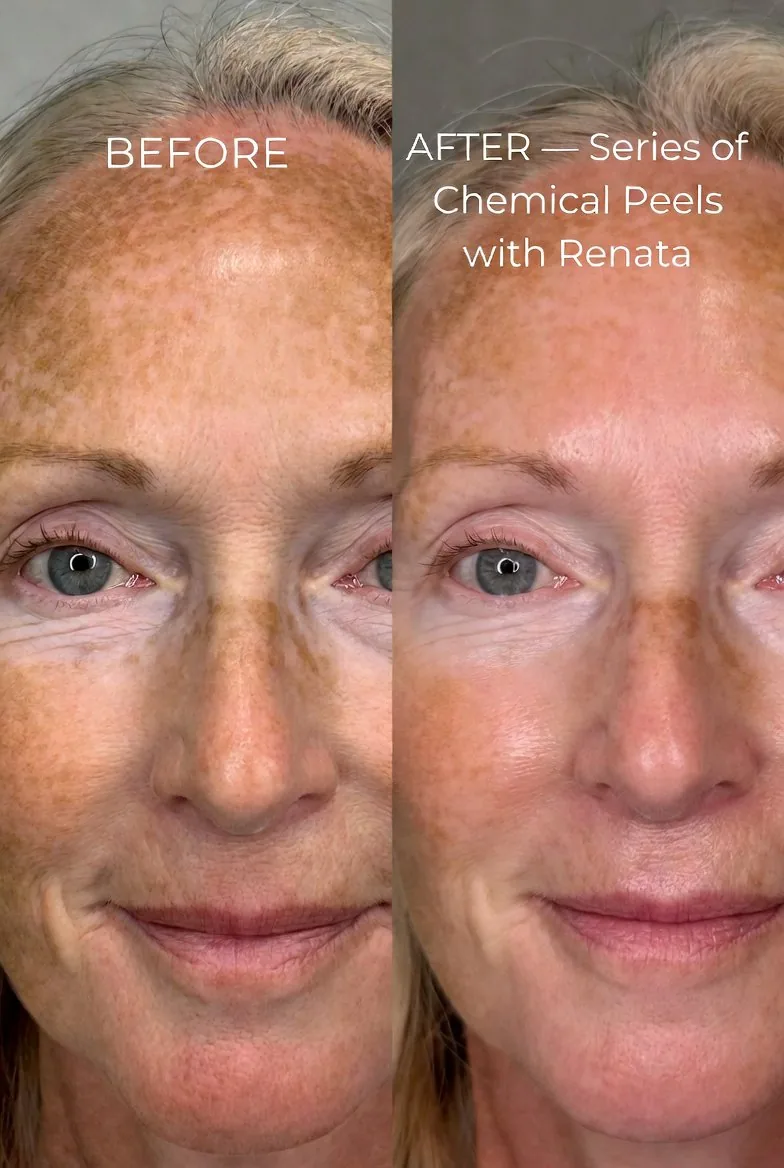
What Chemical Peels Can Do For You
- Brighten dull skin: Reveal the fresh, radiant skin beneath
- Reduce fine lines: Stimulate collagen for smoother skin
- Fade dark spots: Even out sun damage and melasma
- Clear acne: Unclog pores and reduce breakouts
- Improve texture: Minimize roughness and large pores
- Enhance product absorption: Remove the barrier of dead cells
Before and After Your Peel
Before:
- Stop retinoids 5-7 days prior
- Avoid waxing or laser hair removal
- Inform me of any medications or skin conditions
After:
- Keep skin moisturized
- Avoid direct sun and use SPF 30+ religiously
- Don't pick at peeling skin
- Skip active ingredients until skin normalizes
How Often Should You Get a Peel?
For light peels, every 2-4 weeks is ideal for maintaining results. A series of 4-6 peels produces cumulative benefits. After completing a series, monthly maintenance peels keep your skin glowing year-round.
Ready to Experience a Chemical Peel?
Book a consultation and let's find the perfect peel for your skin type and concerns.
Book Your PeelHave questions about whether a chemical peel is right for you? Call or text (206) 660-8472—I'm happy to answer all your questions!